Our Story

ARCHI's development as the Spatially Aware Search & Discovery Engine began in 1997 and has been in continuous development since 1997 ie more than 25 years!
The ARCHI search engine's first publicly available search engine and dataset was also collectively called the 'ARCHI' database and was hosted on the Popular Archaeology website in 1999 sitting on the digital-documents.co.uk domain. In approximately 2005, this website underwent a re-design and re-brand as Archaeology UK. The 3rd and current iteration was in approximately 2012 was, and still is, ARCHI with digital-documents.co.uk being interchangeable (for historical reasons) with www.archiuk.com. Each worldwide country covered in the various ARCHI datasets have a suffix representing the International Organization for Standardization (ISO) 3166-1 alpha-2 codes. However, Great Britain deviates from this and is represented by the 'UK' suffice. Regardless, the ARCHI search engine and associated databases have been central to all websites' iterations since 1999.
Designed and built by Chris Kutler, whose resume includes, 18 years' at The National Archives working as an Archival Data Analyst specialising in Historical data collection, transcription, correction and pattern analysis of data. Chris also holds a Master's Degree in Computer Graphics with specialisation in image processing and 3D image development. Chris has been working on the analysis of data from digital records since 1997. There are many additional tools in the pipeline for the ARCHI suite, including development of a new ARCHI module which will serve as the de facto Geo-Spatial Predictive Modeling Kit.
The initial primary dataset queried by ARCHI was archaeological in nature. It was initially constructed to address the lack of easily available information relating to the distrubution of archaeological sites. This was particularly evident during my time as a student of archaeology at Birkbeck College, University of London, UK.
The current iteration of ARCHI integrates a Natural Language Processing (NLP) system, a geo-spatial search engine, integrated with a map-based data visualisation platform. The datasets it searches contain data from a broad suite of land, property, environmental and geospatial datasets. While ARCHI began life in an archaeological context, over the past 25 years' it has found extensive applications right across the spectrum but in summary it is now used extensively by both professionals and hobbyists to understand land characteristics, development constraints, site history, and environmental conditions, which are all relevant to planning, land-use assessment, property and, of course, archaeological research!
Verfied Timeline of the ARCHI® Mark and ARCHI's Technical Development and Use Cases
1997: The History of English
ARCHI Academic Published Literature Reference: Earliest Academic publication referencing ARCHI indirectly via the ARCHI place-name finder dataset in the acknowledgements of The History of English by Jonathan Culpepper.
1999-06-17: ARCHI Launched
The first version of ARCHI released to the internet.
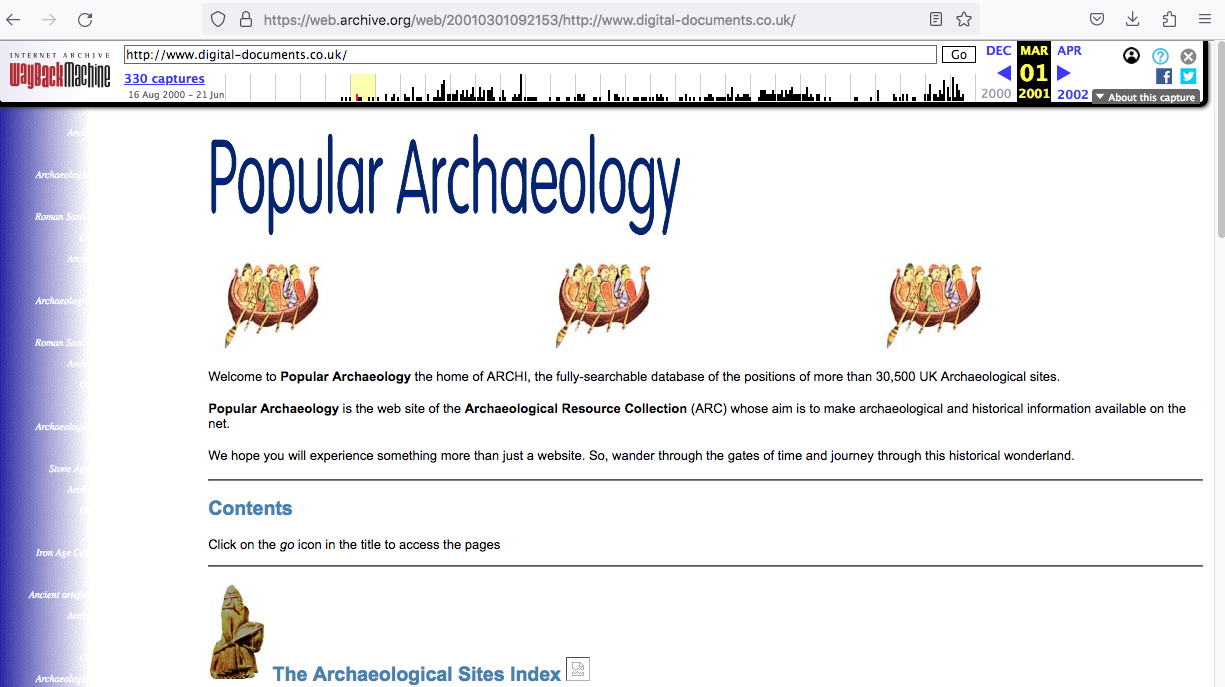
2001-03-01
A Wayback Machine (first version of ARCHI) screenshot showing an early search box from the ARCHI home page using the ARCHI mark on the Popular Archaeology site.

2001-2025
ARCHI Internet Archive Timeline (archi_digdocs_internet_archive.png)
A collated Internet Archive timeline showing continuous ARCHI references on the archiuk.com domain precursor called www.digital-documents.co.uk website and page captures across 24 years.
2002
BBC Public Recognition of Popular Archaeology website: Evidence - Radio 4 interview (mpg/wav)
BBC Radio 4 interview referencing Popular Archaeology and ARCHI - independent, dated, high-credibility evidence.
2003-05-01
First Treasure Hunting magazine review and ARCHI Recommendation
A review of ARCHI in Treasure Hunting magazine by Dave Villanueva - early independent recognition (2003-05-01).
First Treasure Hunting magazine review of ARCHI
2003-10-01
ARCHI Product review by Ted Fletcher
Another review of ARCHI in a specialist magazine - reinforces early market presence.
Additional early Treasure Hunting magazine ARCHI Product review by Ted Fletcher
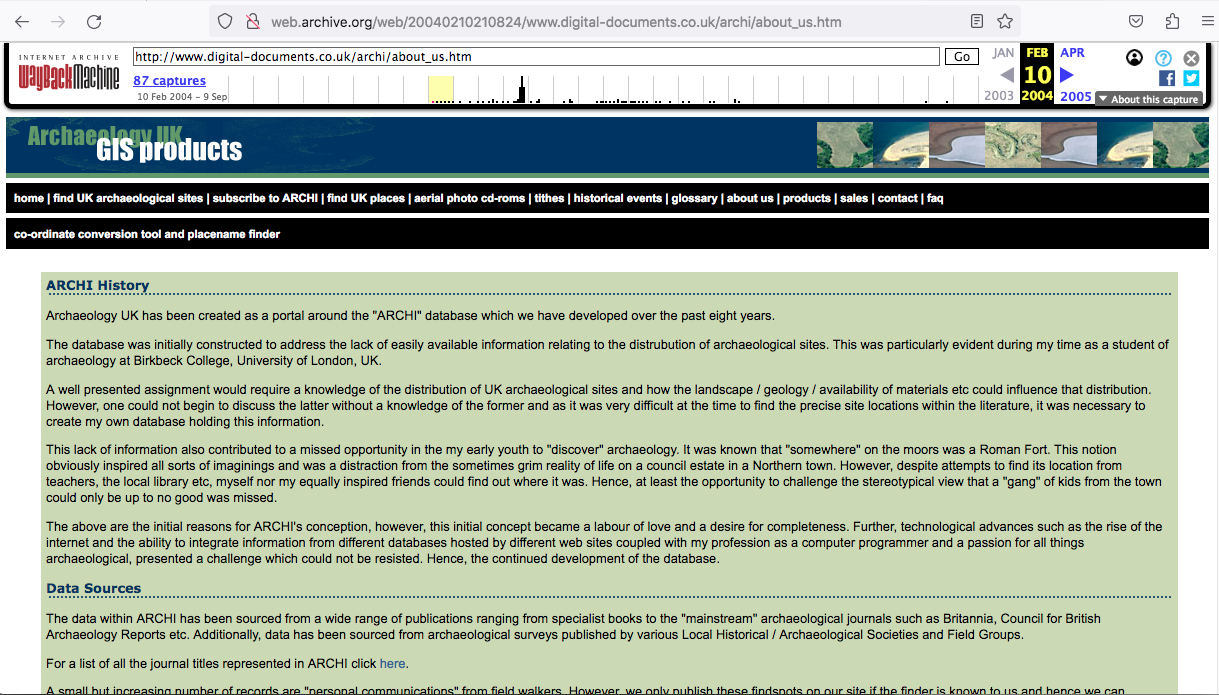
2004-02-10
Internet Archive extract - Archaeology UK
Early Internet Archive webpage referencing the ARCHI service during the "Archaeology UK" branding phase.
Early Internet Archive webpage under the brand of 'Archaeology UK' referencing the ARCHI service
2004-07-01
FreePint article
Published business information magazine articles referencing ARCHI as an example of GIS/Web search technology.
Early Business Information magazine referencing ARCHI as an example of GIS/Web search technology
2003-2025
Monthly Advertising in Print Magazines documented over a period of 23 years
Commencement of significant expenditure on magazine advertising - continuation of marketing presence.
2010
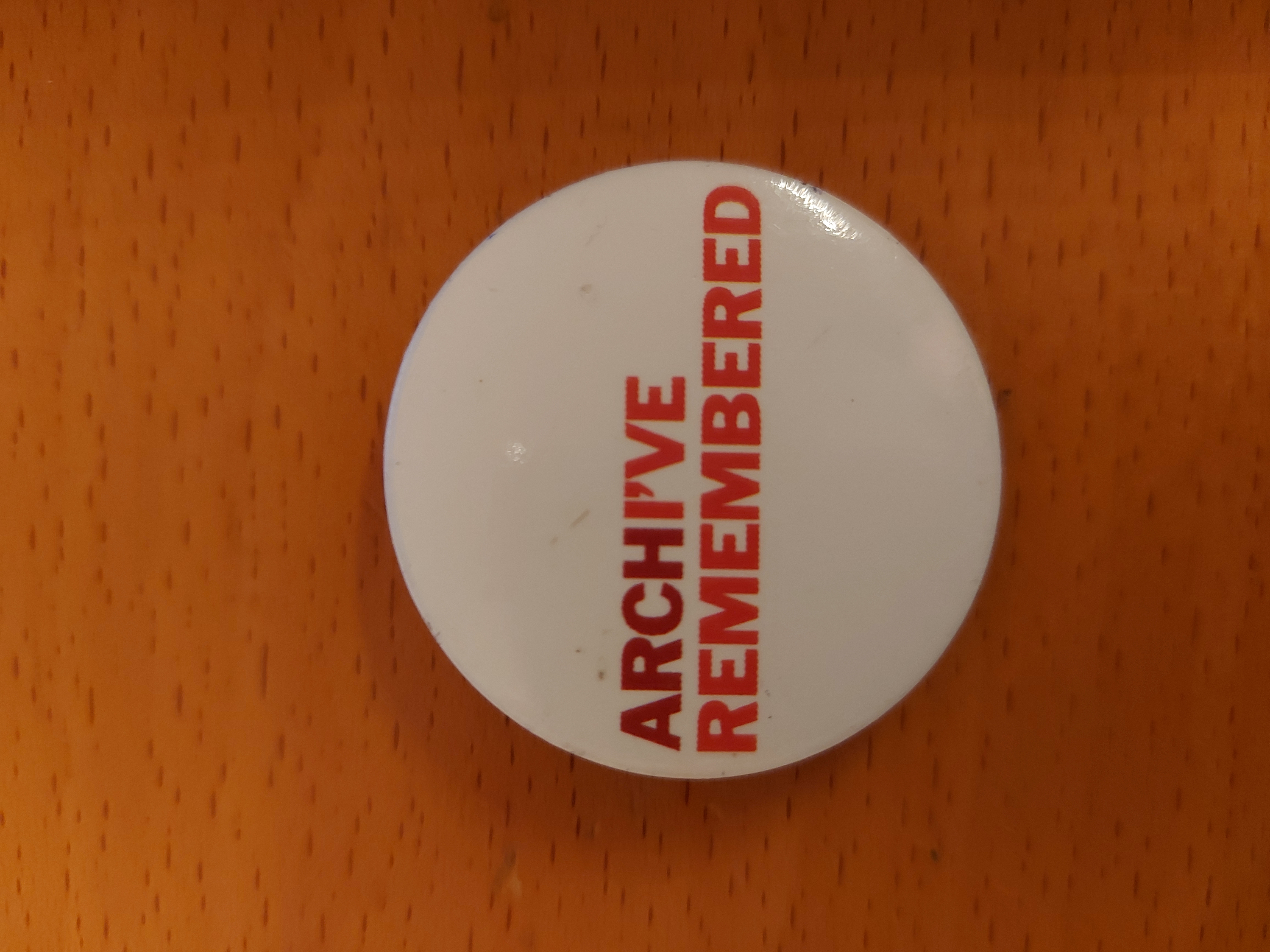
Public use by The National Archives at Kew, UK of 'ARCHI' term in the context / domain of archives and archival practices (badge image)
A badge or memorabilia item referencing the term 'ARCHI' - evidence of brand diffusion in the public archival domain.
TNA ARCHI I've remembered badge
2010
Published literature references - "History of ARCHI" PT1/PT2
Media Publication documenting ARCHI’s development.
2010
First Continuous Monthly Advertising ARCHI in The Searcher magazine ("dog ad")
Continuation of significant expenditure on magazine advertising - continuation of marketing presence.
2010
Princeton University has been subscribing to the ARCHI service since before 2010
A second year of academic recognition - reinforces brand standing.
2012
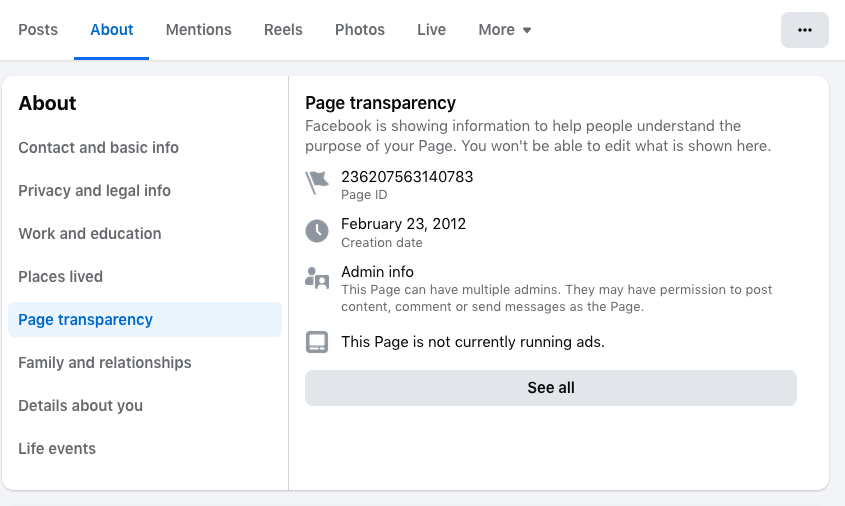
ARCHI Facebook creation page screenshot
ARCHI’s early adoption of social media under its own identity.
2012-2025
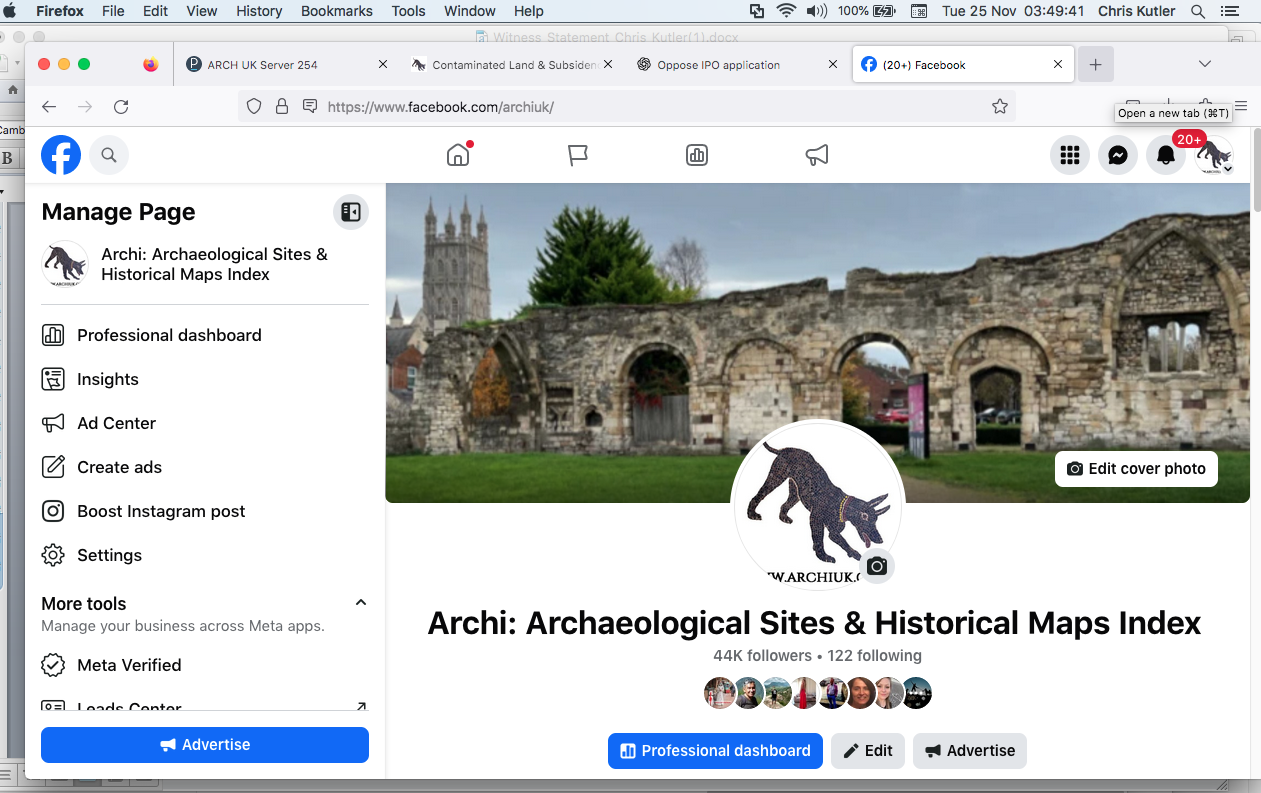
Facebook screenshot (44K followers)
Strong evidence of public recognition, goodwill, and long-term brand presence.
Facebook screenshot (44K followers) Screenshot
2014
archi.archi Top Level Domain (TLD) Registration by archiuk.com
A document showing your ownership attempt and subsequent loss of the archi.archi TLD - relevant to brand history and conflicts.
2014
ARCHI App: Movement into Mobile App Technologies
Website/app presence demonstrating active ARCHI branding.
2014-11-06
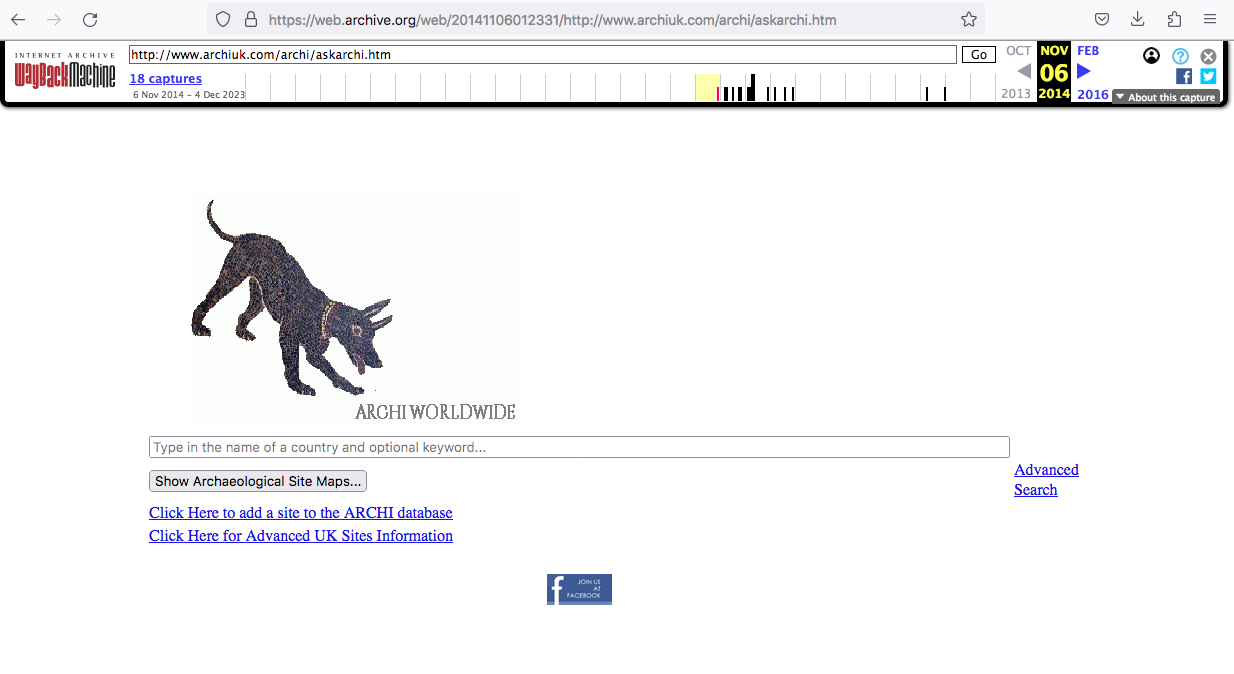
Early "Ask ARCHI" webpage on www.archiuk.com
Earliest use of the term 'ask archi' and having a filename called 'askarchi.htm', as a web-based search and discovery tool on the internet. Part of the brand evolution.
2015
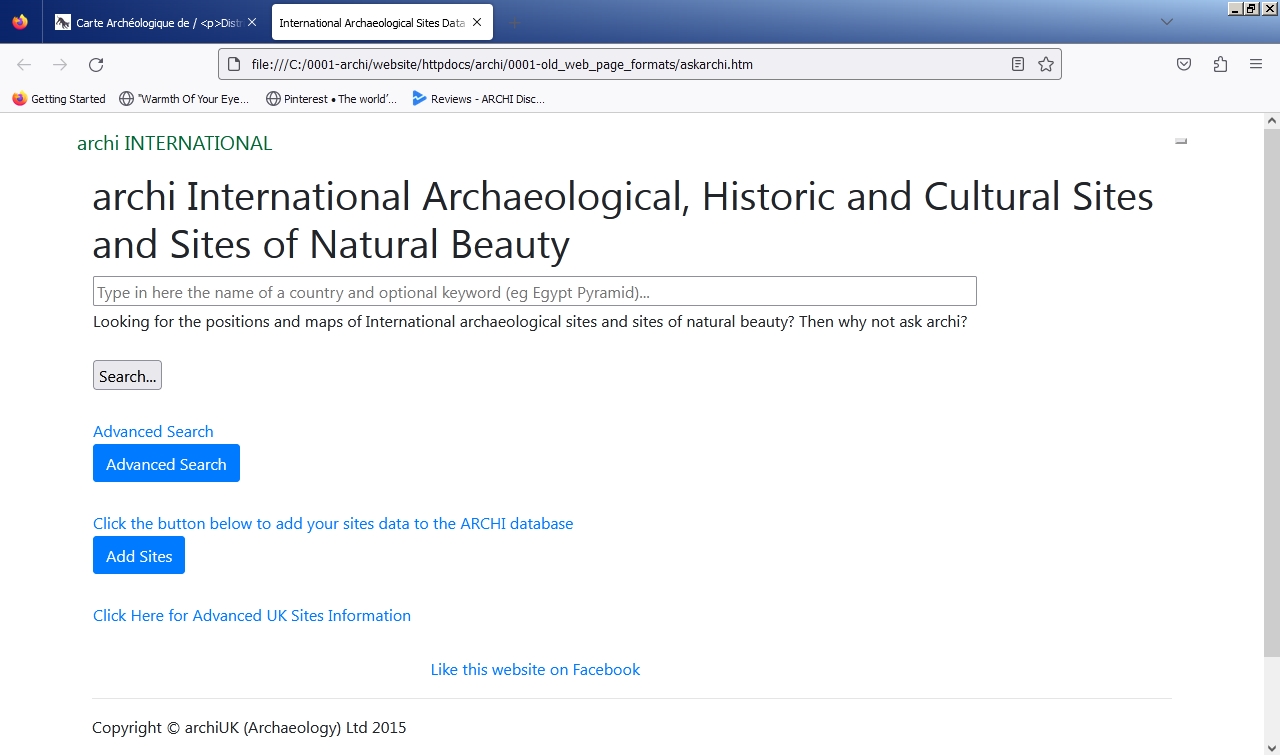
Early use of the phrase 'ask archi' on archiuk.com search interface screenshots
Earliest use of the phrase 'ask archi' on archiuk.com search interface screenshots also showing facilities to upload data to the ARCHI system
UI evidence showing user-facing branding of 'Ask ARCHI'.
2017
ARCHI references in independent published literature
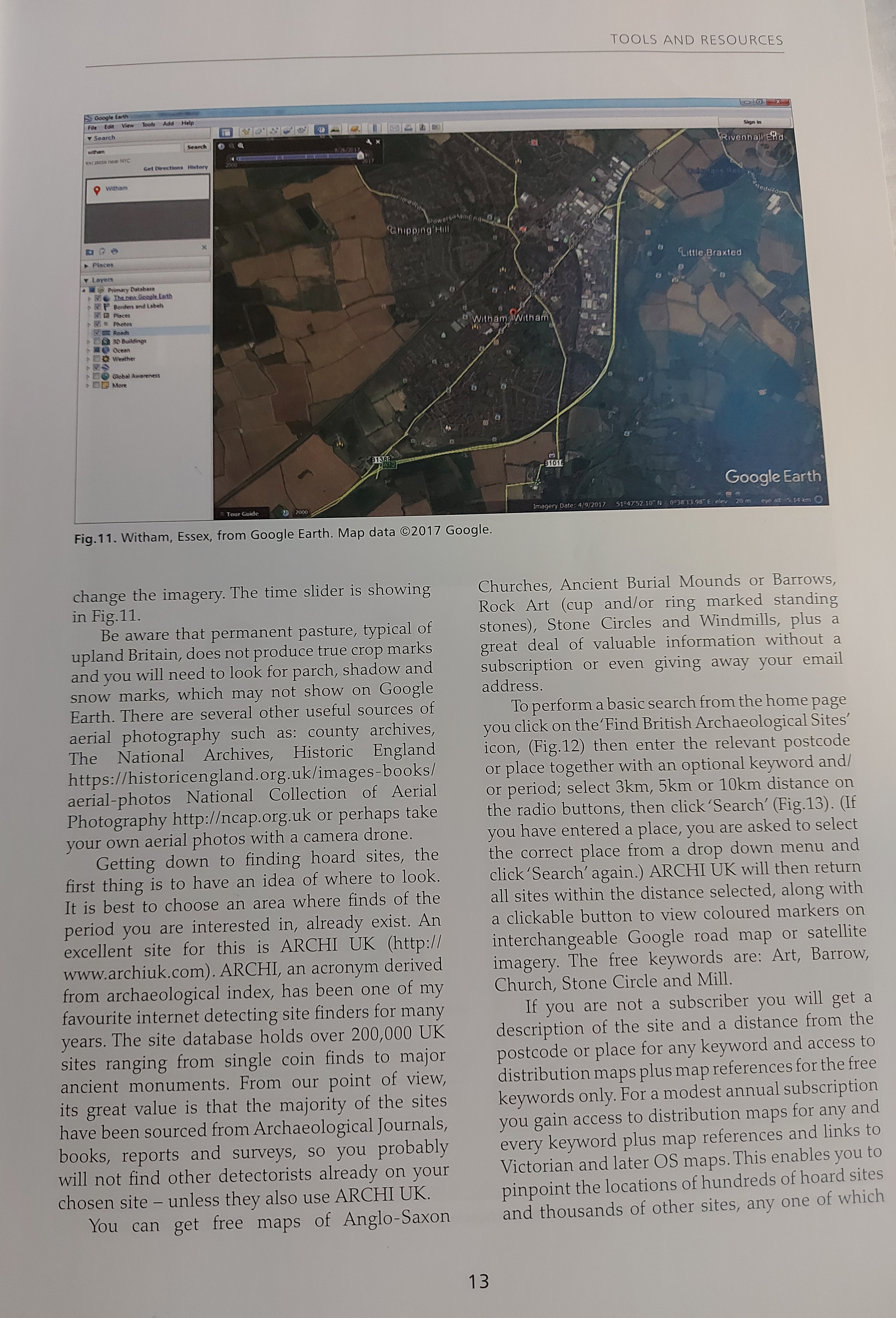
David Villanueva’s book on referencing ARCHI as a search and discovery software tool
More ARCHI references in independent published literature
2020
ARCHI Placename Finder "Gold" feature article
A published article written by Chris Kutler referencing ARCHI - modern literature evidence.
More ARCHI references in independent published literature
2020
UK DetectorNet advert
Advertising continuity in specialist communities.
2021
Diversification into Related Markets and Recognition of
Mainstream press coverage (Country Walking Magazine) referencing ARCHI and Chris Kutler - public reputation reinforcement.
Country Walking magazine feature (multiple pages)

2023
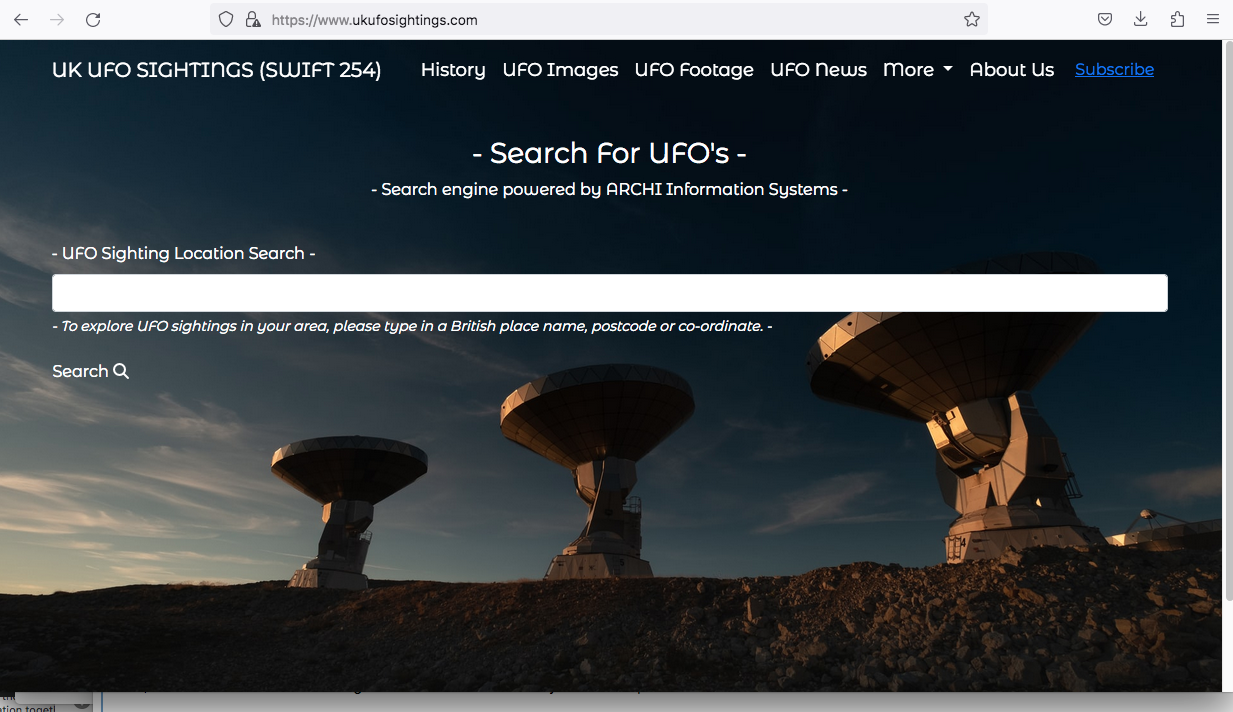
Diversificaiton of the ARCHI Search Engine to non-archaeological or historical datasets (UK UFO Sightings) UK UFO Sightings Screenshot
www.ukufosightings.com Cross-application branding use of ARCHI technology
2024-05-22
All Party Parliamentary Archaeology Group (APPAG) enquiry referenced in NCMD report which discussed ARCHI technology
Formal sector-wide recognition by heritage bodies. The All Party Parliamentary Archaeology Group (APPAG) is a group of MPs and Peers in the Palace of Westminster from various different political parties with an interest in archaeology.
NCMD response to APPAG enquiry referencing ARCHI
2025-04-14
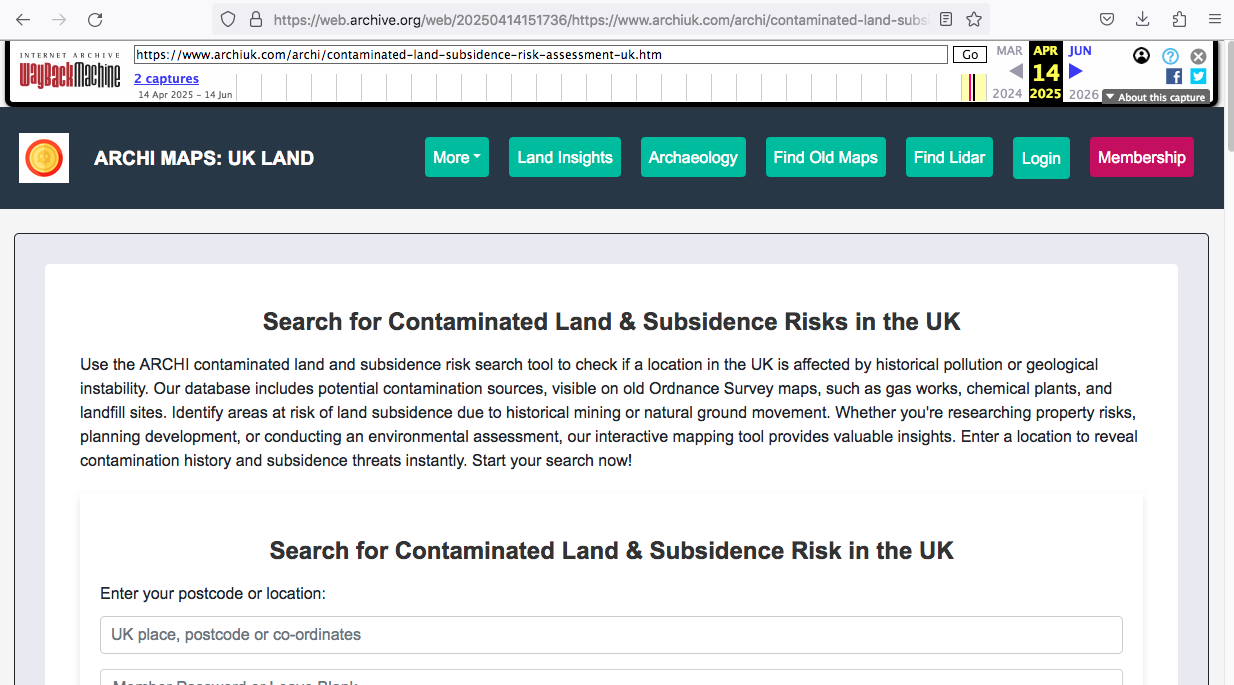
ARCHI’s Usage by Professionals in Planning, Property Development, Land-Use and Environmental Research
ARCHI system has, for many years, operated far beyond the domain of archaeology alone and is widely used as a land-information, planning-research, and environmental-assessment resource.
ARCHI's Land & Property Landing Page
2025-06-23
Ask ARCHI chatbot first-use screenshot
Screenshot of the Ask ARCHI as AI bot (ie branding evolution) from the Internet Archive.
Ask ARCHI chatbot first-use screenshot
2025-07-16
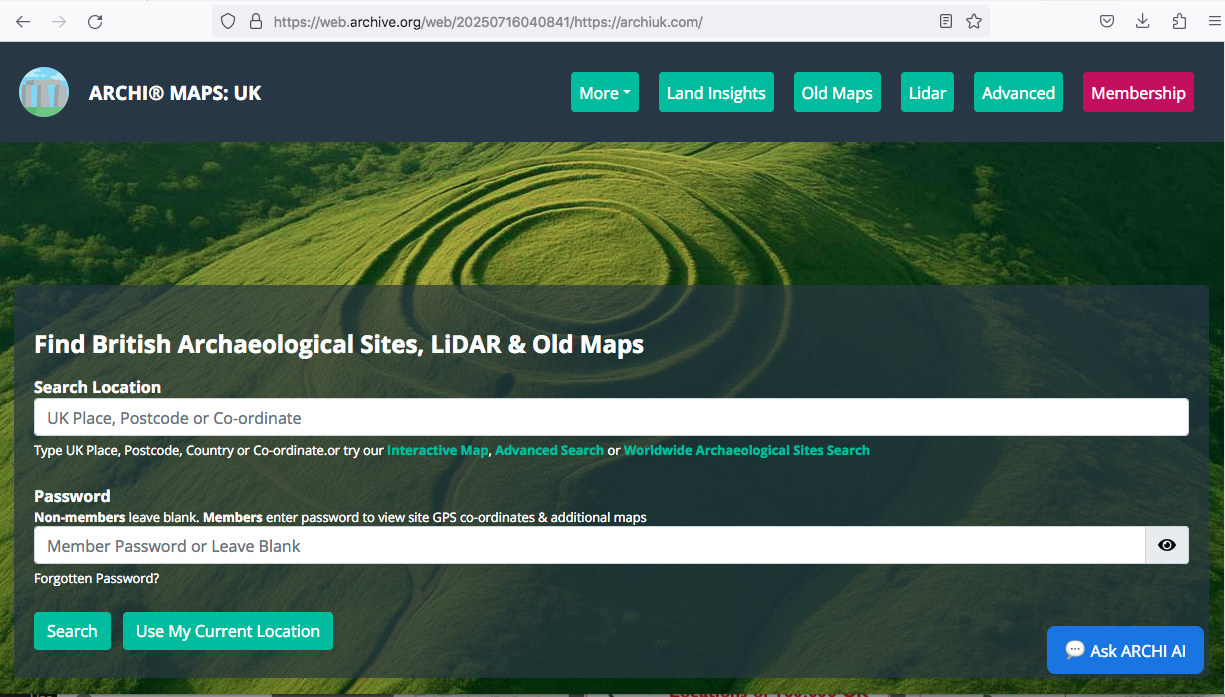
Ask ARCHI button screenshot from the Internet Archive
Independent archived evidence of Earliest ASK ARCHI Chatbot brand deployment. This predates any other 'Ask ARCHI' branded AI chat bot deployment on the internet.
Ask ARCHI Deployment July 16 2025
2025-08-01
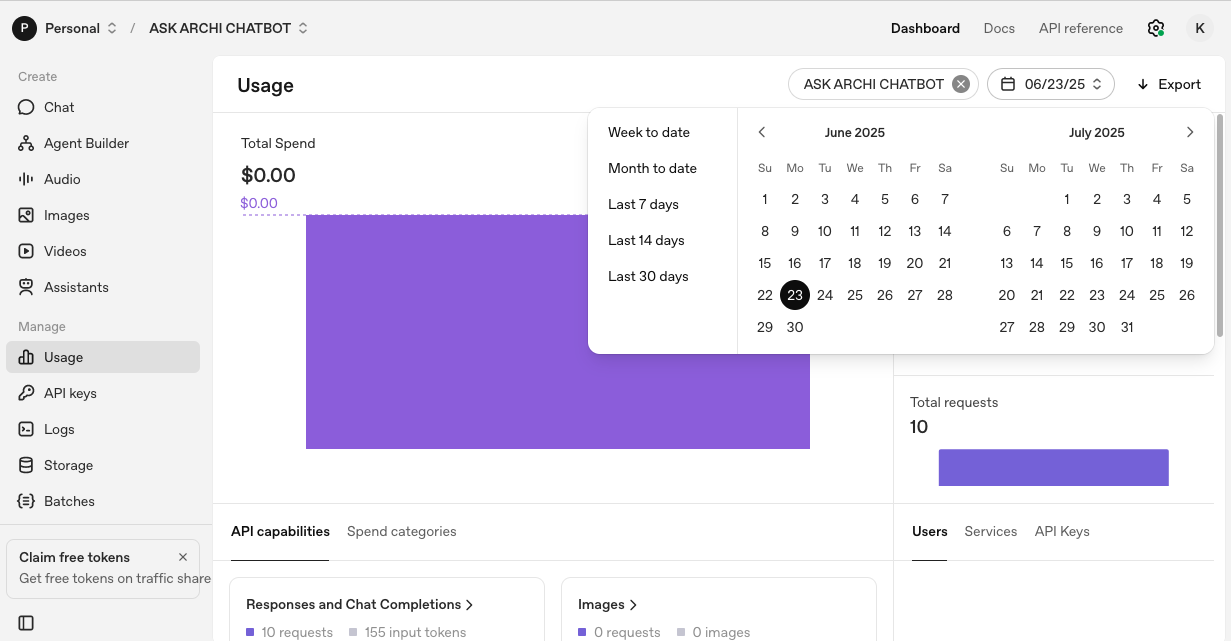
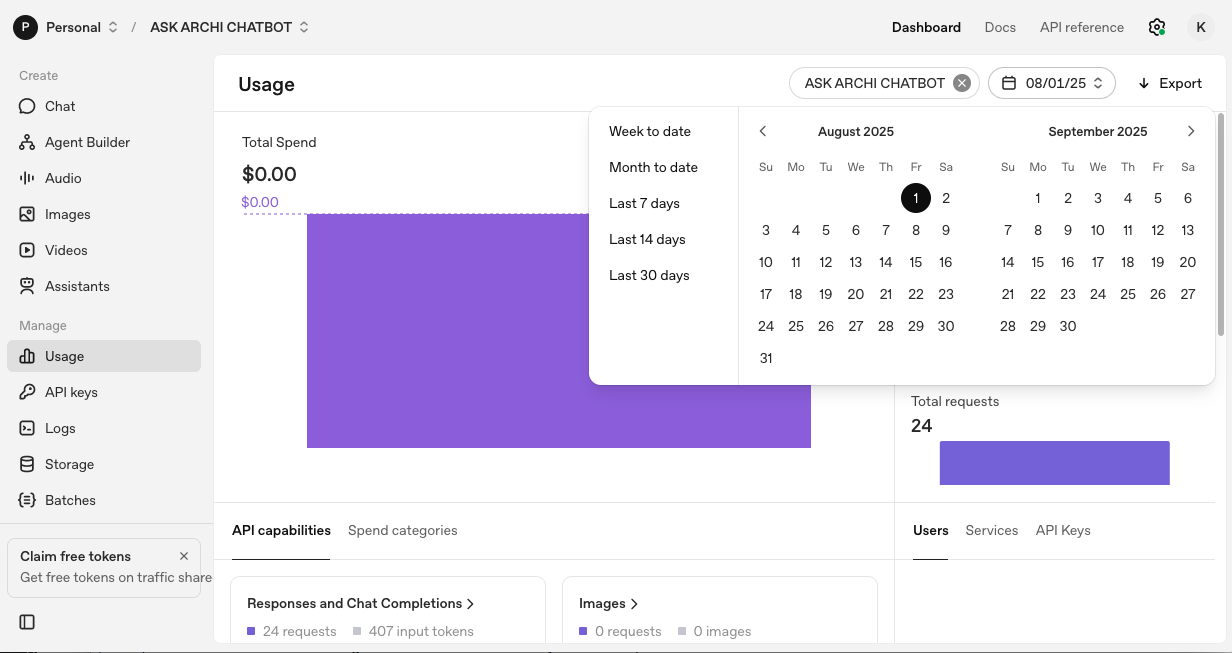
Chatbot metrics screenshot on 1 August 2025
Screenshot from Open AI's chatbot API interface showing evidence of archiuk.uk's 'ASK ARCHI' AI bot to be in full operation ie prior to the date of any other AI or software product using the term 'Ask ARCHI'.
Ask ARCHI Chatbot metrics screenshot on 1 August 2025
2025-07-01
ARCHI Academic recognition in a formal funding context.
Nottingham Trent University funding submission referencing ARCHI
History of the ARCHI® Brand
The ARCHI search engine and database were first conceived and named in 1997. It has been in continuous commercial use since the 1999. The brand was created deliberately, with a clear technical and linguistic rationale, and has since developed substantial goodwill and recognition across archaeology, academia, environmental consultancy, and the land and property development sectors.
The name ARCHI was chosen for three specific reasons. First, it was intended as a direct conceptual successor to ARCHIE, the world's first internet search engine. ARCHIE indexed an archive of online files; ARCHI was designed as the next iteration of that concept - an internet search engine but with the additional capability of indexing and retrieving data within a geo-spatial archive. ARCHI therefore reflects the same underlying principle of structured information retrieval, but with enhancements to query geographically referenced datasets also. The naming intentionally echoes ARCHIE, reinforcing the idea of a modernised and enhanced search engine architecture.
Second, the name reflects the linguistic root shared by both ARCHI and ARCHIE. The stem derives from the Germanic ercan, meaning "genuine," a fitting reference for a platform designed from the outset to provide accurate, verifiable information. This meaning resonated strongly with the project's purpose: enabling users to access genuine data through a unified interface.
Third, the name ARCHI was constructed as an acronym based on the nature of the original dataset. The early version of the database consisted primarily of archaeological site records, later expanded to include any material with a locational element. The structure therefore followed: ARC for archaeology, H for history, and I for index. ARCHI - the Archaeological and Historical Index - encapsulated both the character of the underlying data and the indexing function of the search engine itself. This naming convention was adopted from the earliest stages of development and has remained consistent throughout the system's evolution, despite the user-based expanding across the sprectrum.
From 1999 onwards, ARCHI has referred not only to the publicly accessible search engine but also to the underlying database of geographically tagged information, including datasets widely relied upon in heritage work, environmental assessments, and planning applications. The platform has been subject to continuous development, with regular updates, advertising, public communication, and subscription services in uninterrupted operation for more than two decades.
Over this period, ARCHI has built substantial recognition and goodwill. Early evidence includes long-standing domain registrations, multiple reviews and articles from 2002-2003, and a BBC interview in approximately 2003 that publicly presented ARCHI as an established search engine. The website has been consistently captured by the Internet Archive, providing clear third-party confirmation of ongoing brand use and public visibility. The service has maintained a wide subscriber base, including academic staff, heritage professionals, environmental consultancies, land developers, green-energy companies, schools, and universities.
With respect to the application of the ARCHI product in the planning and development in the built environment domain, Notably, in 2020, ARCHI Information Systems Ltd entered into negotations with planning and environmental consultancies to allow them 3rd party access to a subset of the datasets hosted within the ARCHI system. Thus demonstrating that by this stage the brand was already recognised and trusted within the land and property development sector. Strong evidence of industry awareness and reliance on the ARCHI brand of which we are very proud.
Personal Use of ARCHI
A well presented assignment would require a knowledge of the distribution of UK archaeological sites and how the landscape / geology / availability of materials etc could influence that distribution. However, one could not begin to discuss the latter without a knowledge of the former and as it was very difficult at the time to find the precise site locations within the literature, it was necessary to create my own database holding this information.
This lack of information also contributed to a missed opportunity in the my early youth to "discover" archaeology. It was known that "somewhere" on the moors was a Roman Fort. This notion obviously inspired all sorts of imaginings and was a distraction from the sometimes grim reality of life on a council estate in a Northern town. However, despite attempts to find its location from teachers, the local library etc, myself nor my equally inspired friends could find out where it was. Hence, at least the opportunity to challenge the stereotypical view that a "gang" of kids from the town could only be up to no good was missed.
The above are the initial reasons for ARCHI's conception, however, this initial concept became a labour of love and a desire for completeness. Further, technological advances such as the rise of the internet and the ability to integrate information from different databases hosted by different web sites coupled with my passion for all things archaeological, presented a challenge which could not be resisted. Hence, the continued development of the database.
Data Sources
The data within ARCHI has been sourced from a wide range of publications ranging from specialist books to the "mainstream" archaeological journals such as Britannia, Council for British Archaeology Reports etc. Additionally, data has been sourced from archaeological surveys published by various Local Historical / Archaeological Societies and Field Groups.
For a list of all the journal titles represented in ARCHI click here.
A small but increasing number of records are "personal communications" from field walkers. However, we only publish these findspots on our site if the finder is known to us and hence we can personally validate the source.
Who uses ARCHI?
ARCHI has a worldwide reach. We have had subscriptions from British and American University Archaeology / History Departments, Schools, Archaeological Societies & Clubs, County Archaeology Departments, Archaeological Consultancies, Archaeology students and Hobbyists from Australia to Mexico.
Advanced features such as maps showing the locations of ancient artefact findspots or the positions of amazing archaeological and historic sites are available with an upgrade.